What Is Junior Hockey and How Does It Work?
If your son dreams of playing NCAA college hockey or one day skating professionally, you’ve probably heard the term junior hockey. But for many families entering the hockey world, understanding how junior hockey works can be confusing.
What is junior hockey? How old are the players? How do teams operate? Is it the right path for your athlete?
This guide will explain everything parents and players need to know about junior hockey and why it has become one of the most successful development paths for elite hockey players.
What Is Junior Hockey?
Junior hockey is a highly competitive level of amateur hockey designed for players who have completed youth or high school hockey and are preparing for collegiate or professional careers.
Players typically range in age from 16 to 20 years old, depending on league eligibility rules.
Unlike youth hockey, junior hockey is focused on developing athletes for the next level through:
- Higher competition
- Daily skill development
- Strength and conditioning
- Video analysis
- Mental performance training
- Exposure to college and professional scouts
For many athletes, junior hockey serves as the bridge between youth hockey and NCAA or professional hockey.
Why Do Players Choose Junior Hockey?
Not every player is ready to step directly into college hockey after high school. Junior hockey allows players to:
- Continue developing physically
- Improve skating and hockey IQ
- Gain experience against older, stronger competition
- Increase exposure to college recruiters
- Mature both on and off the ice
Many NCAA coaches actively recruit players from junior leagues because they have already experienced a demanding schedule, traveled extensively, and learned how to compete against older athletes.
How Does Junior Hockey Work?
Unlike traditional youth hockey, junior hockey operates much like a professional sports organization.
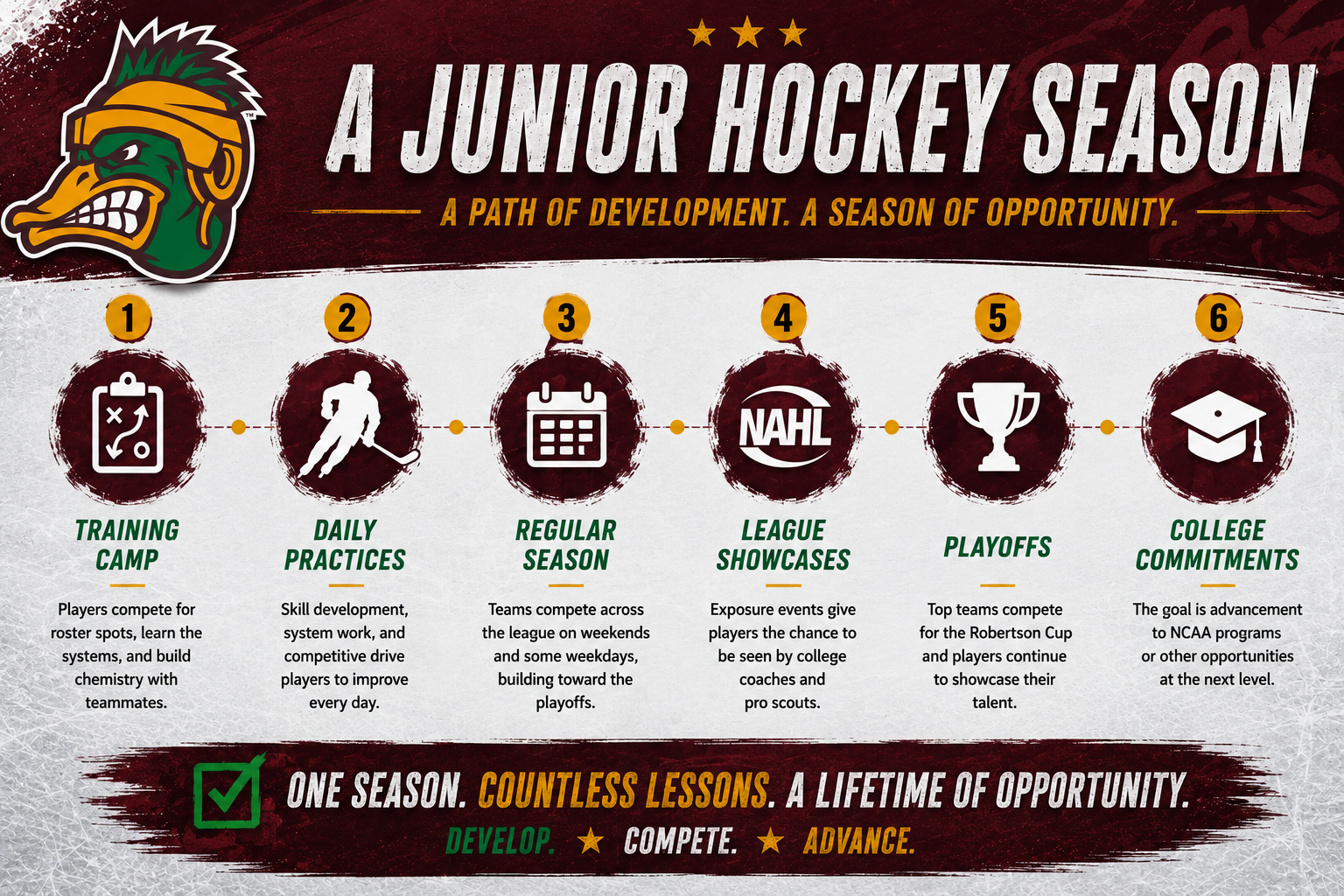
Players join a team for a season and compete against other organizations across their league. A typical season includes:
- Training camp
- Daily practices
- Video sessions
- Strength training
- Regular season games
- League showcases
- Community appearances
- Playoffs
- Throughout the season, players are continually evaluated by college coaches and scouts.
What Is the North American Hockey League (NAHL)?
The North American Hockey League (NAHL) is the only USA Hockey-sanctioned Tier II junior hockey league in the United States and is widely recognized as one of the premier development leagues for players pursuing NCAA hockey.
The league features organizations from across the country that compete at a high level while emphasizing player development both on and off the ice.
Every season, hundreds of NAHL players commit to NCAA programs, making it one of the most respected pathways to college hockey.
What Does a Typical Week Look Like?
While every organization is different, a junior hockey player’s week often includes:
- Team practices
- Individual skill development
- Strength and conditioning sessions
- Video review
- Team meetings
- Weekend games
- Travel
- Recovery sessions
- Players are expected to treat hockey like a full-time commitment while also pursuing education or career goals.
What Is a Billet Family?
Many junior players live with local host families known as billet families. Billet families provide:
- A safe home environment
- Meals
- Transportation support
- Family structure away from home
For younger players living away from home for the first time, billet families become an important part of their development experience.
What Skills Do Junior Coaches Look For? Talent alone rarely earns a roster spot. Successful junior players consistently demonstrate:
- High compete level
- Strong skating ability
- Hockey IQ
- Coachability
- Work ethic
- Discipline
- Character
- Consistency
Coaches value players who make smart decisions, support teammates, and continue improving every day.
Is Junior Hockey Right for Every Player? Junior hockey is not simply about making a roster.Families should ask:
- Does this organization prioritize player development?
- What is the coaching philosophy?
- How many players advance to college?
- What resources are available for athletes?
- Does the culture support long-term growth?
The right junior team helps players become better athletes, better teammates, and better people.
The Goal: Advancement. For many players, junior hockey is a stepping stone to:
- NCAA Division I hockey
- NCAA Division III hockey
- ACHA college hockey
- Professional hockey opportunities
Success isn’t measured only by wins and losses—it’s measured by how well players are prepared for the next stage of their hockey journey.
Final Thoughts
Junior hockey is one of the most important developmental stages in a young athlete’s career. It provides the opportunity to compete at a higher level, develop essential life skills, and pursue collegiate and professional hockey goals.
Choosing the right organization can have a lasting impact on a player’s future. Families should look for a program that values development, character, education, and long-term success just as much as championships.
Whether you’re just beginning to explore junior hockey or preparing for your first tryout, understanding how the process works is the first step toward making informed decisions for your athlete’s future.
Interested in Learning More?
If you’re considering junior hockey and want to learn more about the development opportunities available in the NAHL, we’d love to connect with you. The Minnesota Mallards are committed to helping players maximize their potential both on and off the ice while preparing them for success at the collegiate level and beyond.