Lace up, because we’re about to make a case for why junior hockey might be the best decision a 14-to-20-year-old hockey player ever makes — and no, we’re not just saying that because we’re the Minnesota Mallards. (Okay, maybe a little. But stick with us.)
If you’re a player dreaming about college hockey, or a parent trying to figure out what this whole “juniors” thing is really about, here’s the truth: junior hockey isn’t just a stepping stone to a roster spot. It’s where players get faster, tougher, smarter, and — somewhat sneakily — a whole lot more ready for adulthood. Let’s break down how.
What Even Is Junior Hockey?
Quick refresher for anyone newer to the journey: junior hockey is the level between youth/high school hockey and college hockey, typically for players ages 16-20. The Mallards play in the North American Hockey League (NAHL), a USA Hockey Tier II junior league that’s long been one of the most trusted development pipelines in the sport.
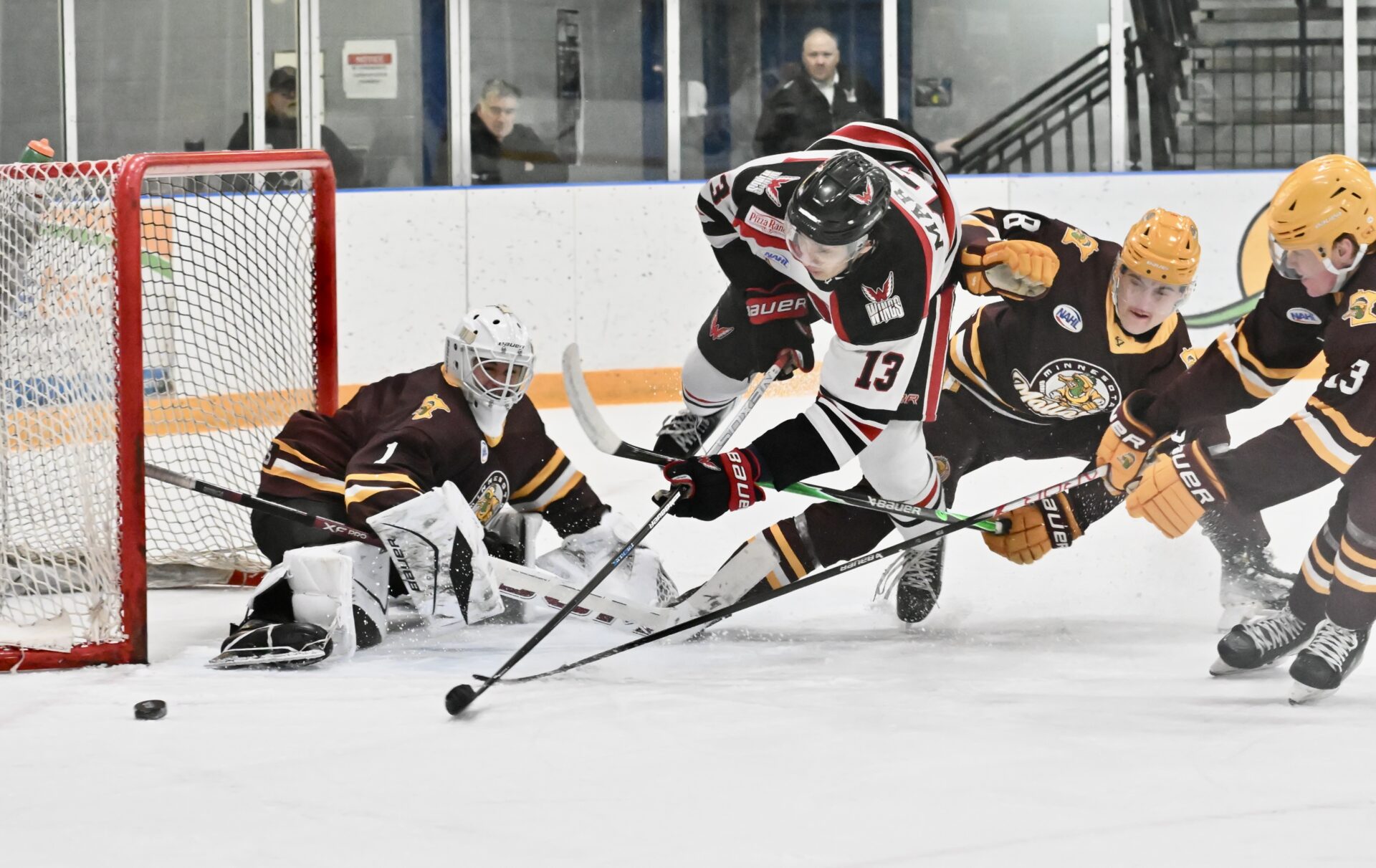
Translation: it’s faster, it’s tougher, and it’s where players go from “really good for their age” to “actually competing for a spot on a college roster.” We play right here at Forest Lake Sports Center, and if you’ve never seen junior hockey live, it hits different — bigger hits, harder shots, and a crowd that gets loud.
The Ice Gets Faster (And So Do You)
Here’s the not-so-secret secret about junior hockey: everyone on the ice is good. Really good. Suddenly you’re not the biggest or fastest player out there — you’re just one of many, which means you have to get sharper, smarter, and more efficient with every shift.
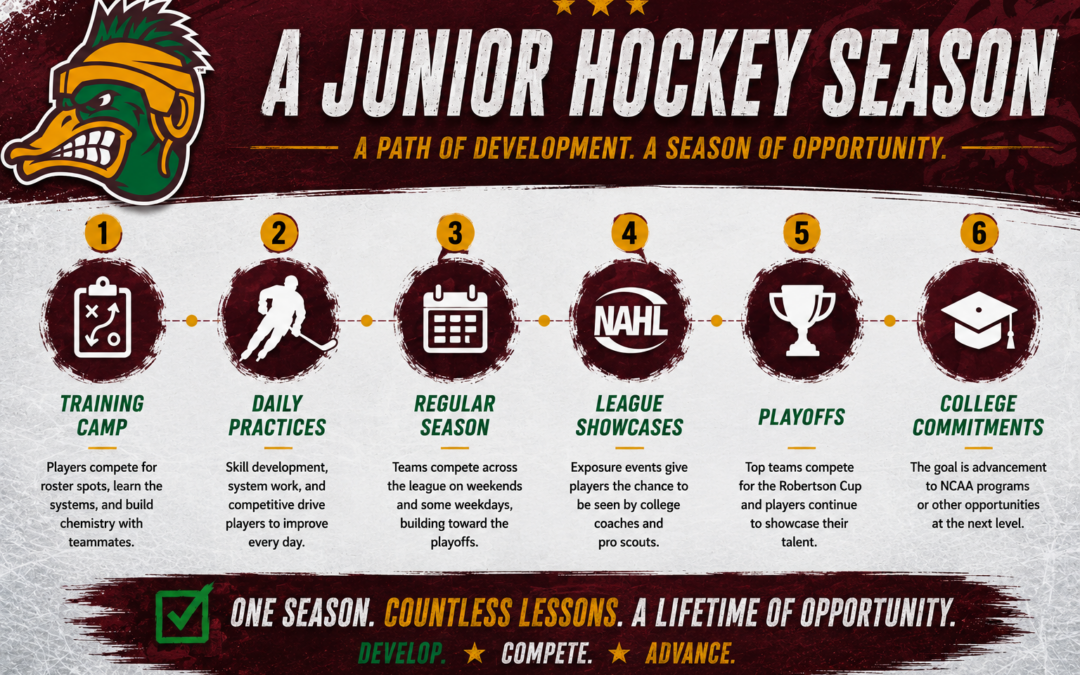
That’s where real development happens. Mallards players train with coaches who build individualized plans around each athlete’s game, sharpening everything from edge work to hockey IQ. It’s the kind of growth that college coaches notice — and it’s exactly why junior leagues like the NAHL have long served as a primary pipeline to NCAA hockey programs.
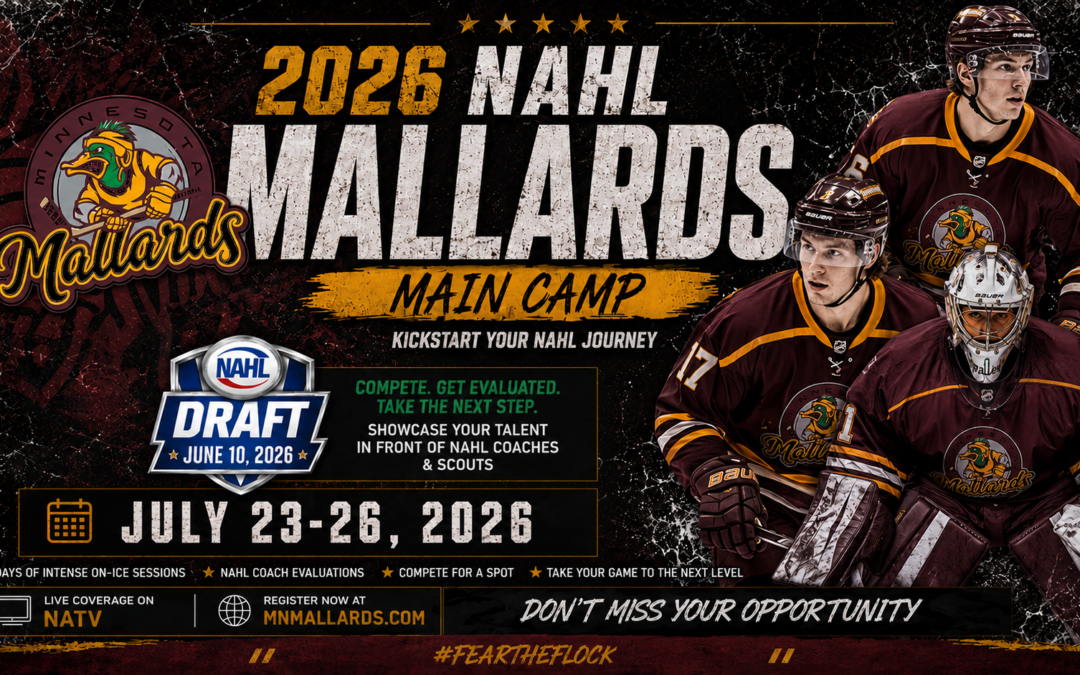
Every summer, we run a Main Camp (mark your calendars: this year’s is July 23-26) where players from across North America come compete for roster spots. It’s intense, it’s exciting, and it’s a great preview of what a junior season actually feels like.
Living on Your Own (Sort Of) — Hello, Billet Families
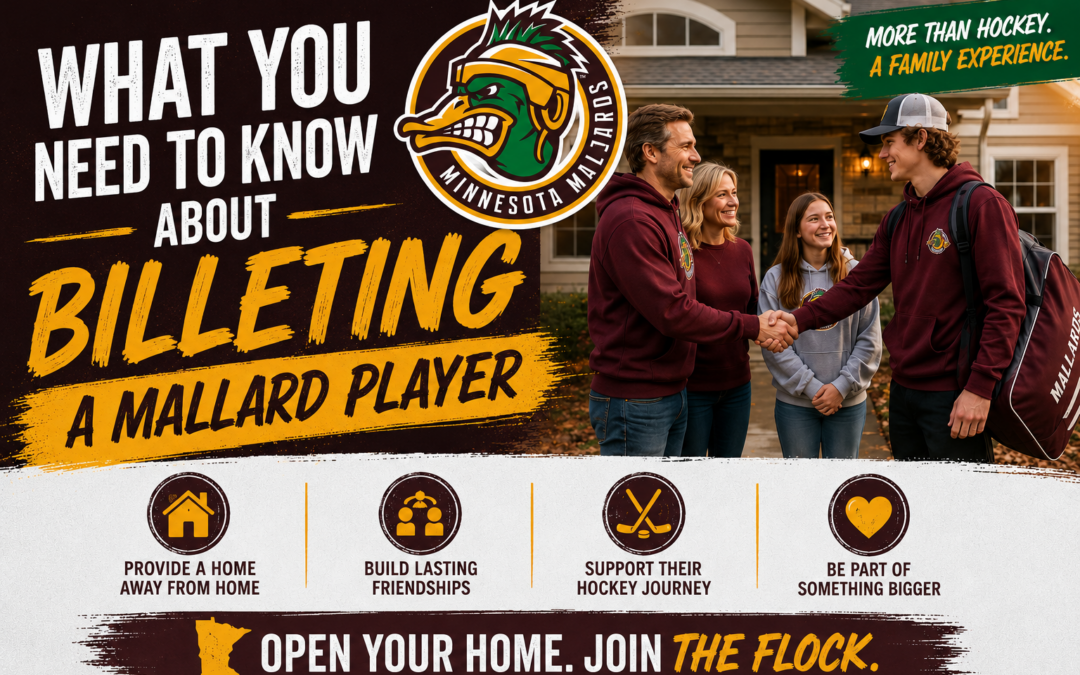
Here’s a part of junior hockey nobody really talks about until they’re living it: many players move away from home and live with a billet family — a local family who opens their home for the season. It sounds like a big leap (it is!), but it ends up being one of the most valuable parts of the whole experience.
Suddenly you’re managing your own laundry, your own schedule, your own mornings before practice. You’re building real relationships with people outside your immediate family. You’re learning independence in a supportive environment — which, fun fact, looks a whole lot like what’s waiting for you in a college dorm a year or two later. Billet life is basically a trial run for “leaving the nest,” except this time there’s a hockey team and a host family cheering you on the whole way.
(Speaking of billet families — if you know a family who’d love to host a player and gain an honorary extra kid for the season, send them our way.)
School Still Counts — And That’s a Good Thing
Let’s be honest: balancing hockey and school is no joke. Practices, travel, games, and somehow still turning in homework on time? It’s a lot. But here’s the upside — junior hockey players get really, really good at time management, because they have to be.
That skill doesn’t disappear after the season ends. It’s the exact muscle college students need to balance classes, practice, film sessions, and (eventually) a social life. Players who come through junior hockey tend to hit campus already knowing how to manage a calendar that would make most freshmen panic.
The Life Skills Nobody Puts on a Highlight Reel
Goals and saves get the Instagram posts, but the real wins in junior hockey often happen off the scoresheet. Our whole program is built around values we talk about constantly in the locker room: Accountability. Work Ethic. Coachability. Teamwork. Discipline. Grit. Sportsmanship.
Translation for the parents reading this: your kid is going to lose some games. They’re going to get benched, get scratched, hit a slump. And learning how to respond to that — with the right attitude, with accountability instead of excuses — might honestly be more valuable than anything that happens between the whistles.
Our players also spend time off the ice giving back — reading to elementary classrooms, running youth skating clinics, volunteering around Forest Lake. Mentorship goes both ways: while learning leadership themselves, our players become role models to the next generation of young skaters. It’s all part of the same philosophy that’s painted (literally) into our team values:
“The harder you work, the luckier you get.” “Preparation equals separation.”
The Recruiting Pathway: Getting Seen, Getting Better
If college hockey is the goal, junior hockey is where the visibility happens. Showcases, league games streamed on NAHL TV, and a longer, more competitive season all mean more chances for college coaches and scouts to see what you can do. Add in a strong relationship with your coaching staff and consistent on-ice growth, and junior hockey becomes less about “getting discovered” and more about being undeniably ready when the opportunity comes.
Why Families Choose the Mallards
We’re proud to bring fast, exciting NAHL hockey to Forest Lake — but we’re just as proud of what happens around the games. Elite training. Academic support. Billet families who become a second home. A coaching staff that genuinely invests in who players become, not just how they perform.
If you’re a player who thinks you’ve got what it takes, we want to hear from you — fill out our recruiting inquiry here and let’s start the conversation.
Okay, But Can I Just… Come Watch a Game?
Yes. Please. Honestly, that’s the best place to start.
Come see what junior hockey is actually like — the speed, the hits, the atmosphere, the whole experience. Tickets are $12 for general admission and $10 for kids, seniors, military, and first responders, which is basically the most affordable exciting night out in the Twin Cities metro. Bring the family, bring your team, bring your “I’m still deciding about juniors” skepticism, and we’ll handle the rest.
Grab tickets and check the schedule for the next home game at Forest Lake Sports Center. Come early, stick around after, and meet the players and coaches who make the Mallards a place where hockey players grow up — on and off the ice.
We’ll see you at the rink.